Myth or Fact? Is Tertiary Filtration Really Necessary?
What is Tertiary Filtration?
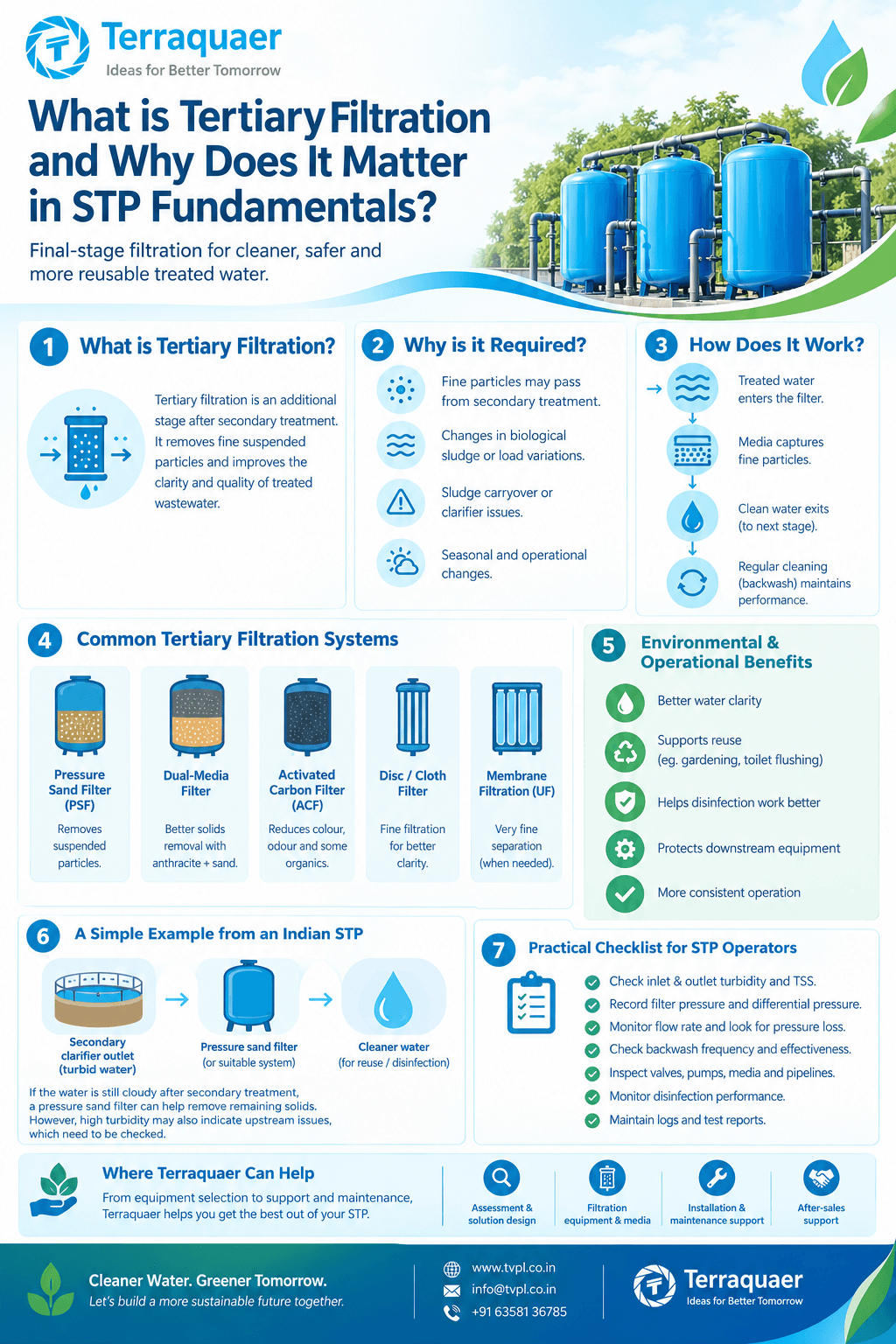
Tertiary filtration is the final polishing stage in a water or wastewater treatment system. It follows primary and secondary treatment and is designed to improve the overall quality of treated water before discharge or reuse.
Its primary purpose is to remove particles and contaminants that remain after biological treatment.
Myth vs. Fact
❌ Myth
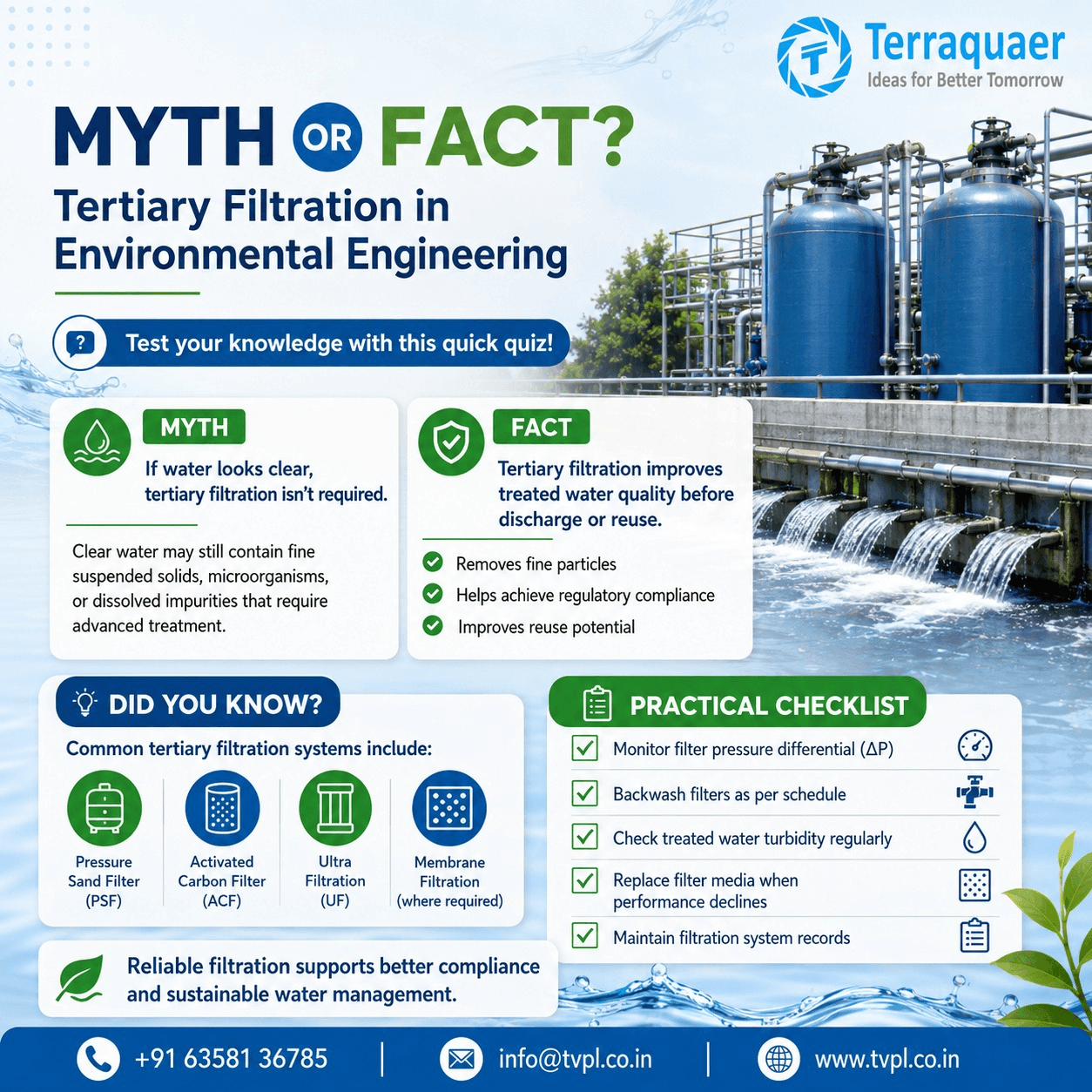
"If treated water looks clear, tertiary filtration isn't required."
Many industries assume that visually clear water has already been fully treated. However, clarity alone does not indicate water quality.
Fine suspended particles, microorganisms, colour, odour, and dissolved organic compounds may still be present even when water appears clean.
✅ Fact
Tertiary filtration improves treated water quality before discharge or reuse.
A properly designed tertiary filtration system helps:
- Remove fine suspended solids
- Improve treated water clarity
- Reduce turbidity
- Enhance downstream process performance
- Support regulatory compliance
- Increase the suitability of treated water for reuse applications
Why is Tertiary Filtration Important?
Many industrial processes require higher water quality than what secondary treatment alone can provide.
Tertiary filtration helps industries:
- Meet environmental discharge standards
- Improve treated water consistency
- Protect downstream equipment
- Reduce operational issues caused by fine solids
- Support water recycling and reuse initiatives
- Enhance overall treatment plant performance
Common Tertiary Filtration Systems
Different industries use different filtration technologies depending on their water quality requirements.
Pressure Sand Filter (PSF)
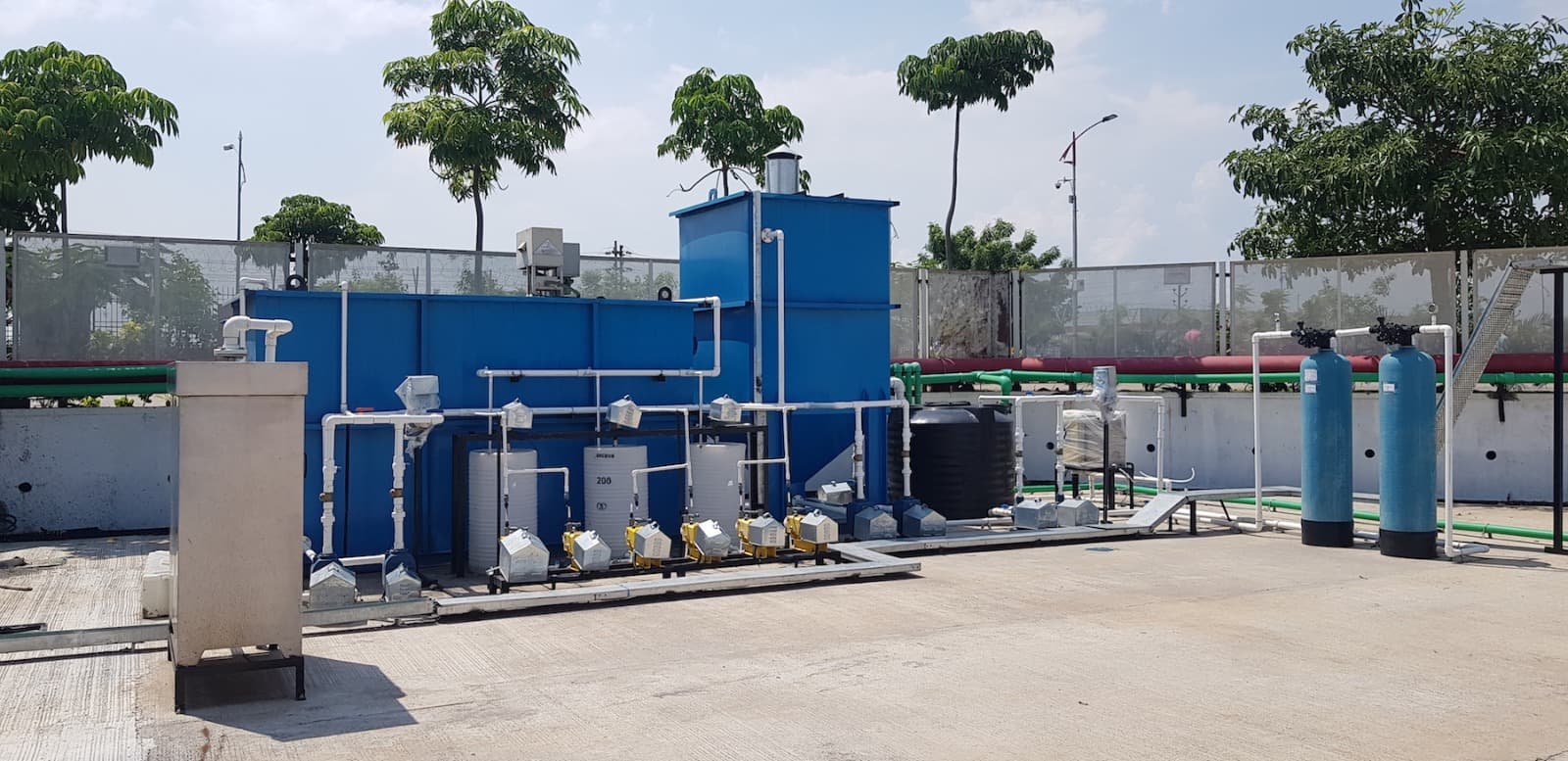
Pressure Sand Filters remove fine suspended particles that remain after clarification and biological treatment. They are widely used as the first stage of tertiary filtration.
Activated Carbon Filter (ACF)
Activated Carbon Filters help remove colour, odour, residual organic compounds, and traces of chemicals, improving overall water quality.
Ultrafiltration (UF)
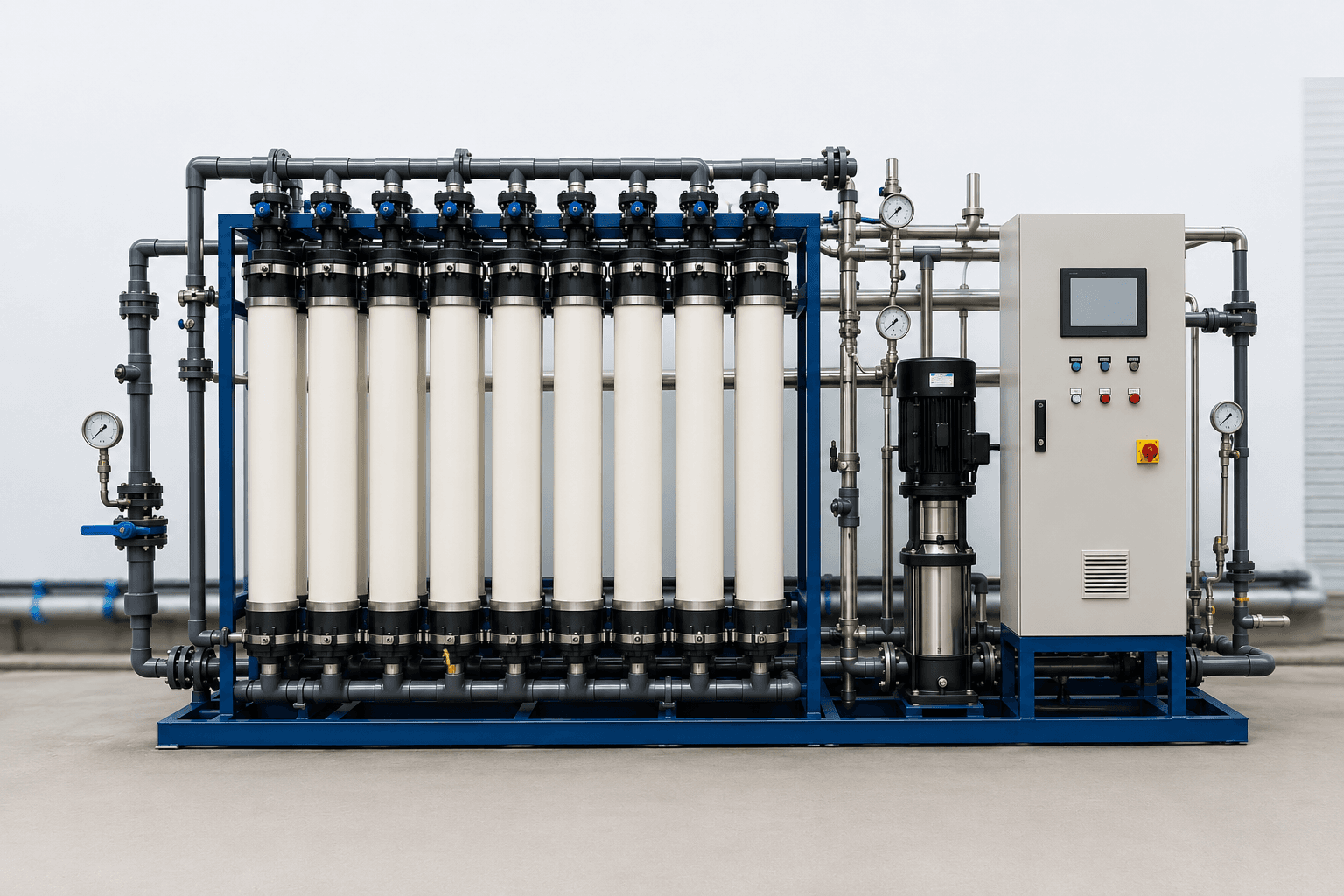
Ultrafiltration uses membrane technology to remove extremely fine suspended solids, bacteria, and colloidal particles. It is commonly installed before Reverse Osmosis (RO) systems or for high-quality water reuse.
Membrane Filtration
Advanced membrane filtration systems are selected where industries require higher treated water quality for recycling, process reuse, or specialized applications.
Practical Checklist for Better Filtration Performance
Routine monitoring helps ensure consistent filtration performance.
✔ Monitor filter pressure differential (ΔP)
✔ Perform backwashing according to the recommended schedule
✔ Check treated water turbidity regularly
✔ Replace filter media when filtration efficiency declines
✔ Maintain inspection and maintenance records
✔ Inspect valves, pipelines, and instrumentation periodically
Indian Industrial Perspective
Industries across sectors such as pharmaceuticals, food processing, textiles, chemicals, engineering, and manufacturing are increasingly focusing on water conservation and regulatory compliance.
Tertiary filtration supports these objectives by improving treated water quality and enabling greater opportunities for water reuse where technically appropriate.
The choice of filtration technology depends on factors such as influent quality, desired treated water quality, process requirements, and applicable environmental regulations.
Conclusion
Tertiary filtration is much more than an optional finishing step. It serves as the final polishing stage that enhances treated water quality, improves system reliability, and supports sustainable water management practices.
Rather than relying solely on the appearance of treated water, industries should evaluate filtration requirements based on water quality parameters, operational objectives, and compliance needs.
At Terraquaer Venture Private Limited, we design and deliver customized water and wastewater treatment solutions—including ETPs, STPs, WTPs, tertiary filtration systems, RO plants, and water reuse solutions—to help industries achieve efficient, reliable, and compliant operations.
Need guidance on selecting the right tertiary filtration system?
Our engineering team can help you identify the most suitable solution for your application while supporting long-term operational performance.