
Tank Cleaning Service
Safe cleaning of all types of water, process, chemical, effluent, sludge, septic, STP, ETP, fire water, and utility tanks.
Request a quote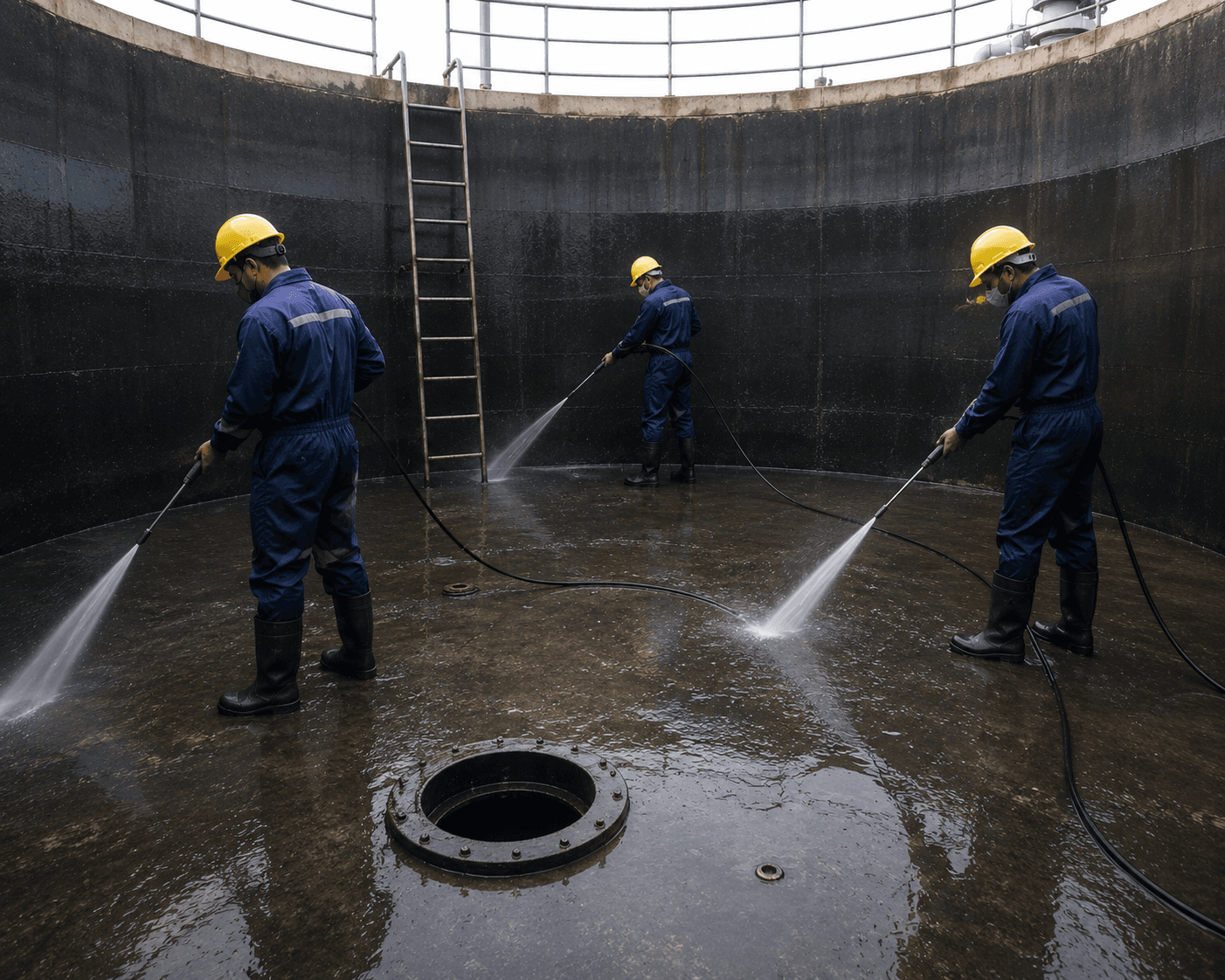
Overview
Terraquaer provides professional tank cleaning services for industrial, commercial, institutional, municipal, and residential facilities. We clean all types of tanks including raw water tanks, treated water tanks, overhead tanks, underground tanks, fire water tanks, process tanks, chemical storage tanks, effluent tanks, sludge holding tanks, septic tanks, STP and ETP tanks, utility tanks, and rainwater harvesting tanks.
How safe tank cleaning is carried out
A safe tank cleaning job starts before anyone enters the work area. Terraquaer first studies the tank service, stored contents, volume, access opening, depth, residue condition, nearby utilities, ventilation, shutdown window, and disposal route. The tank is isolated from inlet, outlet, dosing, pumping, electrical, and process connections as applicable. A job safety analysis and work permit are aligned with the client team before cleaning begins.
Where confined-space activity is involved, the work is handled with controlled entry, continuous supervision, ventilation, oxygen and hazardous gas checks, suitable PPE, lighting, access control, attendant support, and emergency readiness. Water, sludge, settled solids, scale, biological growth, floating matter, oil traces, or chemical residues are removed using the appropriate combination of pumping, desilting, scraping, brushing, pressure washing, disinfection, and final rinsing. After cleaning, Terraquaer inspects the tank condition, checks visible cracks or corrosion signs, clears the area, and shares practical observations for future maintenance.
Why Terraquaer experts are best suited for this service
Tank cleaning is not only housekeeping. A dirty tank can disturb water quality, block pumps, overload filters, affect STP or ETP performance, create odour complaints, support microbial growth, and expose workers to confined-space hazards. Terraquaer brings water, wastewater, utility, chemical handling, O&M, and site safety experience into the same job. That means the cleaning team understands not only how to remove the sludge but also why the tank became dirty, what downstream equipment may be affected, and what preventive action will reduce repeat problems.
Clients should ask Terraquaer for tank cleaning because we provide a planned, technically supervised, and safety-focused service rather than a basic labour-only cleaning activity. Our team can coordinate survey, manpower, tools, pump-out, shutdown timing, sludge handling, disinfection, documentation, and follow-up recommendations through one accountable service provider. For industrial and institutional clients, this reduces risk, saves internal coordination time, and gives management a cleaner record of what was done and why it matters.
Common challenges in tank cleaning
Tank cleaning often becomes difficult because of limited access, poor visibility, slippery surfaces, low oxygen risk, toxic or flammable vapours, hard sludge, biological growth, corrosive residue, damaged ladders, awkward tank geometry, limited disposal space, and tight shutdown time. Terraquaer plans the method around these actual site conditions. We do not treat every tank the same; a potable water tank, fire water reservoir, chemical tank, effluent equalization tank, and sludge tank each need different precautions, cleaning intensity, and disposal discipline.
When to call Terraquaer
Call Terraquaer when tanks show sediment, odour, turbidity, biological growth, oil scum, sludge build-up, flow obstruction, recurring filter choking, poor pump suction, water-quality complaints, or before major maintenance and statutory inspection. We also support periodic preventive cleaning schedules for plants, utilities, hotels, hospitals, societies, industries, government sites, and commercial campuses.
Key features
- Cleaning of all common tank types: raw water, treated water, fire water, overhead, underground, process, effluent, sludge, chemical, septic, STP, ETP, and utility tanks
- Pre-job site survey, tank identification, isolation plan, work permit support, and job safety analysis
- Confined-space entry control with ventilation, gas testing, PPE, rescue readiness, and trained supervision where man-entry is required
- Mechanical desilting, sludge removal, scraping, pressure washing, disinfection, and safe disposal coordination
- Cleaning method selected as per tank service, residue, access condition, material of construction, and client shutdown window
- Support for shutdown planning, manpower, tools, pump-out arrangements, and post-cleaning inspection
- Before-after reporting, cleaning records, and recommendations for future preventive maintenance
Key outcomes
- Cleaner storage and process tanks with reduced sludge, odour, scaling, microbial growth, and contamination risk
- Improved water quality, pump protection, and lower chances of line choking or downstream treatment upset
- Safer tank-cleaning execution through planned isolation, gas monitoring, trained manpower, and supervised work practices
- Reduced downtime because the job is planned around site operations, access limits, and disposal requirements
- Reliable documentation for facility, audit, maintenance, and compliance records
- Single accountable Terraquaer team for survey, cleaning, disposal coordination, inspection, and follow-up recommendations
Standards & certifications
Work permit, confined-space safety, PPE, isolation, ventilation, gas testing, housekeeping, and site-specific EHS practices as applicable.
Who it's for
Industries, utilities, hospitals, hotels, societies, campuses, municipal sites, PSUs, and commercial facilities needing safe cleaning of water, process, fire water, chemical, effluent, sludge, septic, STP, ETP, or utility tanks.
Related solutions

Have a scope in mind?
Tell us what you're trying to deliver.
Share your capacity, compliance milestone, and timeline. An engineer responds within one business day.